

(What it actually does, what it doesn’t, and how to use it)
(Updated February 2026)
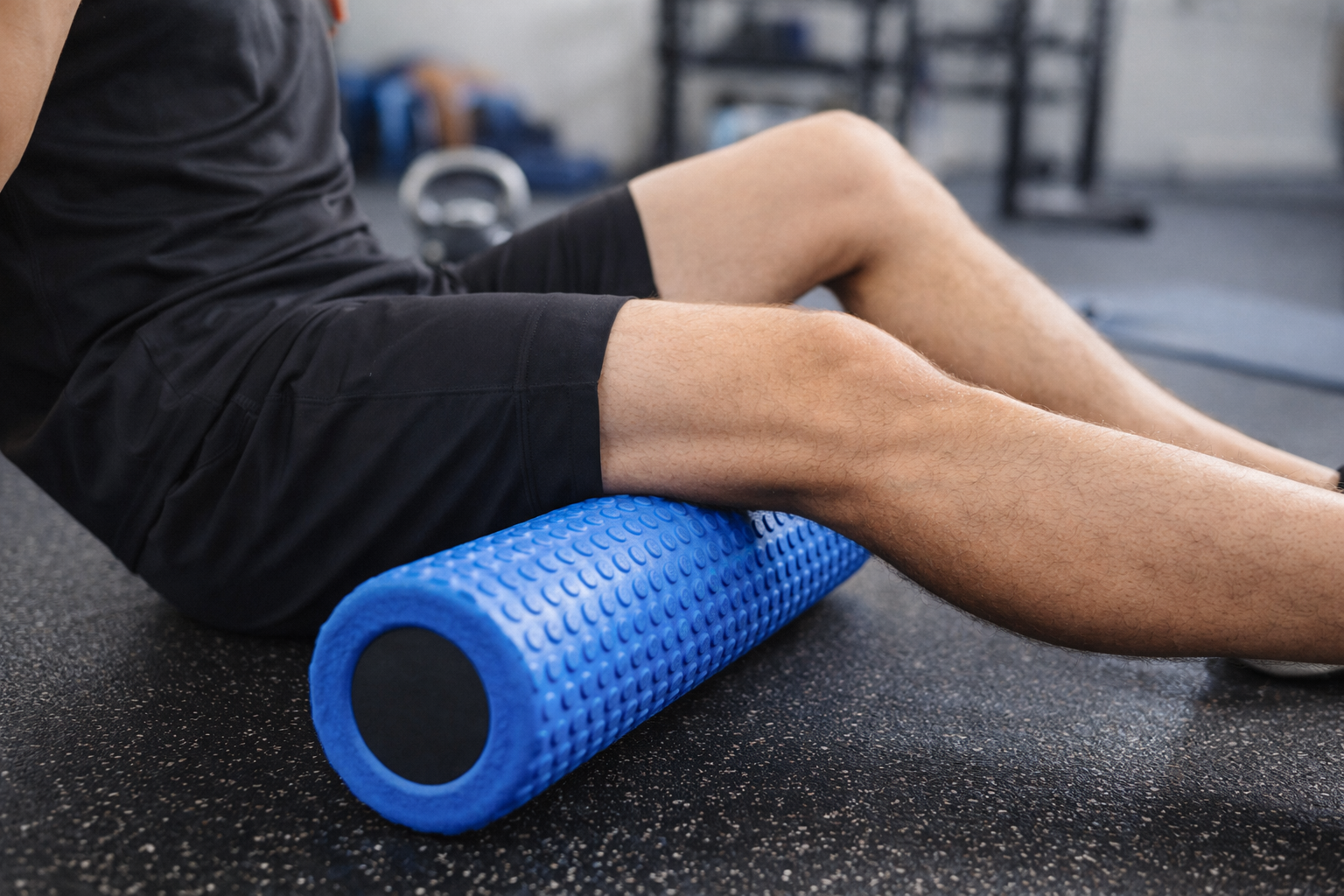
Foam rolling is one of the most popular tools in fitness and rehab. Some people swear it “breaks up knots” and makes you more flexible instantly. Others think it’s pointless.
The truth is in the middle: foam rolling can temporarily increase range of motion and reduce soreness for some people, but it’s not “lengthening” your muscles permanently on its own. The best use of foam rolling is as a short-term tool that helps you move better today—so you can train, rehab, and progressively build long-term mobility.
What foam rolling can do
1) Improve flexibility (range of motion) in the short term
Research consistently shows that foam rolling can produce acute (short-term) increases in range of motion (ROM).
Important nuance: Those ROM gains are often explained more by changes in stretch tolerance / nervous system sensitivity than by “breaking up” tissue or permanently changing muscle length.
2) Help recovery by reducing perceived soreness (for some people)
Foam rolling after training may reduce DOMS (delayed-onset muscle soreness) and help you feel better over the next day or two, even if it doesn’t dramatically change performance.
3) Not sabotage your workout
Unlike long-duration static stretching (done in isolation), foam rolling is generally associated with neutral performance effects—meaning it usually doesn’t reduce strength/power when used reasonably in a warm-up.
What foam rolling doesn’t do (myths)
Myth 1: “Foam rolling breaks up scar tissue/adhesions”
For most people, the idea that a foam roller is “breaking up fascia adhesions” is oversold. The more supported explanation for rapid changes is sensation and tolerance (your nervous system allowing more motion), not massive structural tissue remodeling in 60 seconds.
Myth 2: “If it hurts, it’s working”
More pain does not equal more benefit. Excess pressure can irritate tissues and make you guard more. You want uncomfortable-but-tolerable, not “white knuckle” rolling.
Myth 3: “Foam rolling = long-term flexibility”
Foam rolling can help you access more motion today, but lasting flexibility changes usually come from:
-
strength training through range
-
consistent exposure to the positions you want (mobility practice)
-
gradual load and volume progression
Long-term ROM changes from foam rolling can happen, but they’re typically modest and work best when combined with training.
Why foam rolling sometimes “works” so fast
If you roll your quads for 60–90 seconds and suddenly squat deeper, that doesn’t automatically mean your muscles “lengthened.” More likely:
-
your discomfort threshold changed,
-
the area feels less threatened/tight,
-
you’re moving more confidently.
That can still be very useful—especially before lifting, running, or rehab.
How to foam roll the right way (simple and effective)
Best “dose” for most people
-
30–60 seconds per muscle group
-
1–2 rounds
-
2–4 areas max (don’t spend 25 minutes rolling everything)
This aligns with common research protocols used in studies showing ROM/soreness effects.
Pressure guideline
-
Aim for 3–6/10 discomfort
-
You should be able to breathe normally
-
If you’re tensing your face/holding your breath → lighten up
Where to roll (high-value targets)
-
Quads
-
Hamstrings
-
Glutes
-
Calves
-
Upper back (thoracic area)
Skip direct rolling on joints (kneecap, hip bone, spine) and be cautious with very sensitive lateral thigh/IT band rolling—often better to roll adjacent muscles (glutes/quads) instead.
Foam rolling vs stretching: which is better for flexibility?
For acute ROM, foam rolling and stretching can both help—but newer reviews suggest neither is clearly “superior” to other warm-up components for immediate ROM changes (like general warm-up/dynamic movement).
Practical takeaway:
-
If you like foam rolling and it helps you move better → keep it.
-
If you hate it → you can get similar benefits from a good warm-up + targeted mobility + strength work.
The best way to turn short-term flexibility into long-term flexibility
Here’s the “truth” most people miss:
Flexibility that lasts comes from strength + control in new ranges.
Try this sequence:
-
30–60 sec foam roll the tight area
-
30–60 sec mobility drill (controlled)
-
2–4 sets of strength work through that range (split squats, RDLs, calf raises, rows, etc.)
That’s how you convert “I feel looser” into “I move better permanently.”
If you want a structured plan that blends mobility with progressive loading, this fits perfectly with Strength Training and Performance and Orthopedic Conditions and Sports Physical Therapy.
When foam rolling might not be the right answer
Consider getting assessed if:
-
pain is sharp, worsening, or not tied to training load
-
symptoms include numbness/tingling/weakness
-
you’re constantly chasing “tightness” but never improving function
Sometimes the issue isn’t flexibility—it’s load tolerance, strength imbalance, or sensitivity. That’s where PT helps.
Quick FAQ
Does foam rolling actually increase flexibility?
It can increase ROM in the short term, and may help longer-term when used consistently—especially combined with training.
Should I foam roll before or after workouts?
Both can work:
-
Before: may help ROM without harming performance
-
After: may reduce soreness for some people
How long should I foam roll?
Most people do well with 30–60 seconds per area, 2–4 areas total.
References (copy/paste)
Follow Quincy Physical Therapy on Facebook, LinkedIn, and Instagram!